The first version of a product isn't software. It's understanding.

RETREVE

Retreve didn't begin with a product specification. It began with a conversation about a recurring frustration: despite significant investment in analytics, business users still relied on technical teams to answer relatively simple questions. That observation became the foundation for a much broader exploration into how enterprise intelligence could become more accessible, intuitive and commercially valuable.

As engineering progressed, it became clear that building the platform was only part of the challenge. Before customers could experience the product, investors could support it or engineering could confidently prioritise it, the idea itself needed to become tangible. The product had to be understood before it could be fully realised.

Rather than waiting for software to reach maturity, the product evolved through research, product strategy, brand development, experience design and successive Product Experience Models. By the time the platform was ready, the vision had already been tested, refined and communicated through countless conversations with stakeholders, customers and investors.

Retreve became more than an AI platform.

It became proof that clarity is often the first product an organisation needs to build.

Industry
Enterprise AI / Business Intelligence
Engagement
Product Strategy Product Discovery Brand Strategy Experience Design Product Experience Model™
Role
Product Definition & Commercial Readiness
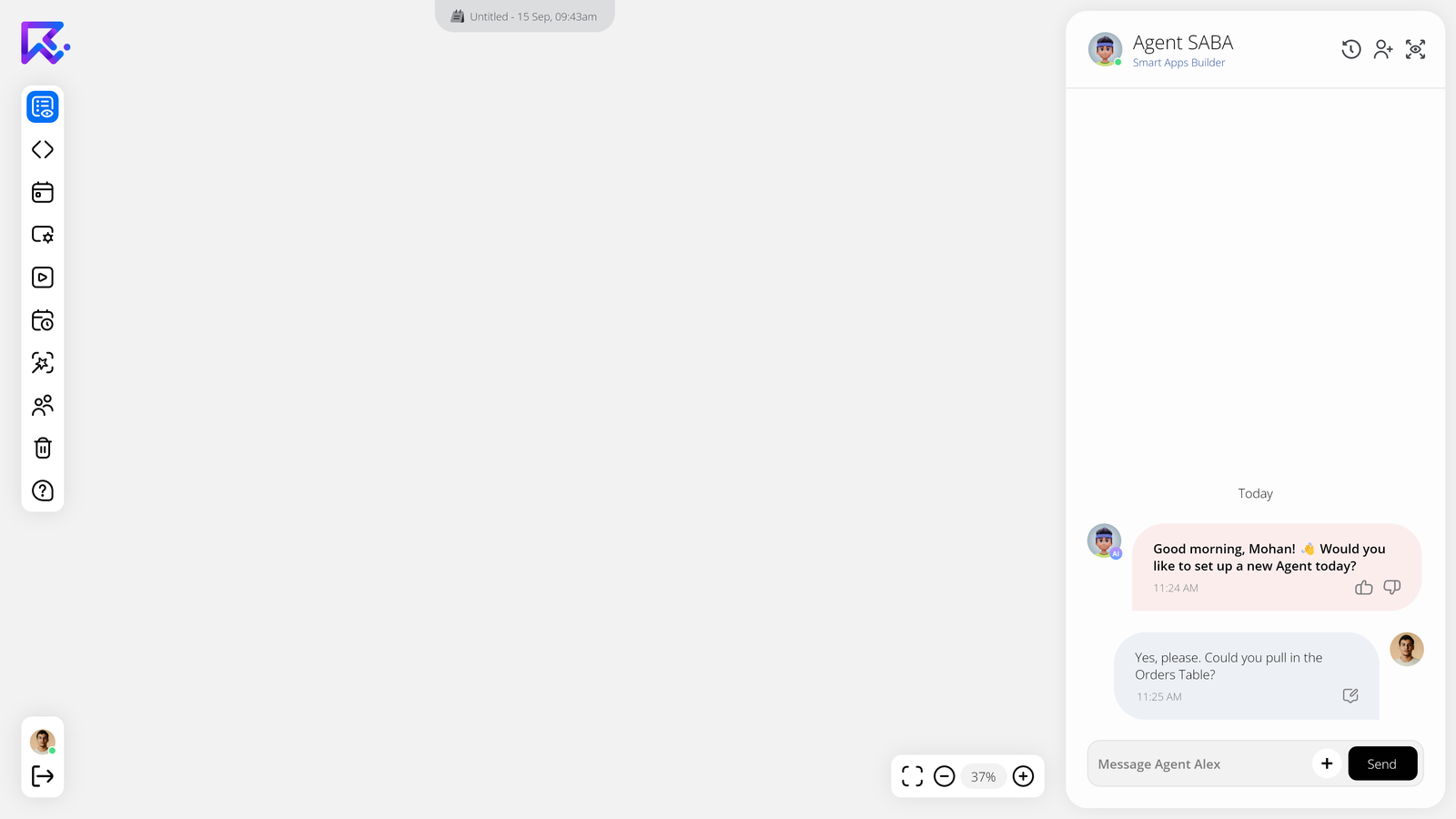
Retreve product interface
Full-width hero image of the final product.

Executive Summary

Retreve began with an ambitious idea: make enterprise intelligence as natural as asking a question. While organisations had invested heavily in data platforms and reporting tools, accessing meaningful insights often remained dependent on technical expertise. The opportunity wasn't to build another dashboard. It was to rethink how people interacted with enterprise knowledge.

The engagement started with a founder's vision rather than a fully defined product. Engineering commenced in parallel, but many of the decisions that would ultimately shape the platform had yet to be made. Before software could be built with confidence, the product itself needed direction, its purpose, positioning, interaction model and commercial narrative all required definition.

Extant's role was to transform that early vision into a product that people could understand long before the platform reached technical maturity. Through product discovery, market research, strategic positioning, brand development, experience design and successive Product Experience Models, the idea evolved into something customers could experience, investors could evaluate and engineering teams could confidently build towards.

The result was more than a product design engagement. It demonstrated that commercial validation and technical development do not need to happen sequentially. By allowing both to evolve together, Retreve entered development with greater clarity, stronger alignment and a much clearer understanding of the product it was becoming.
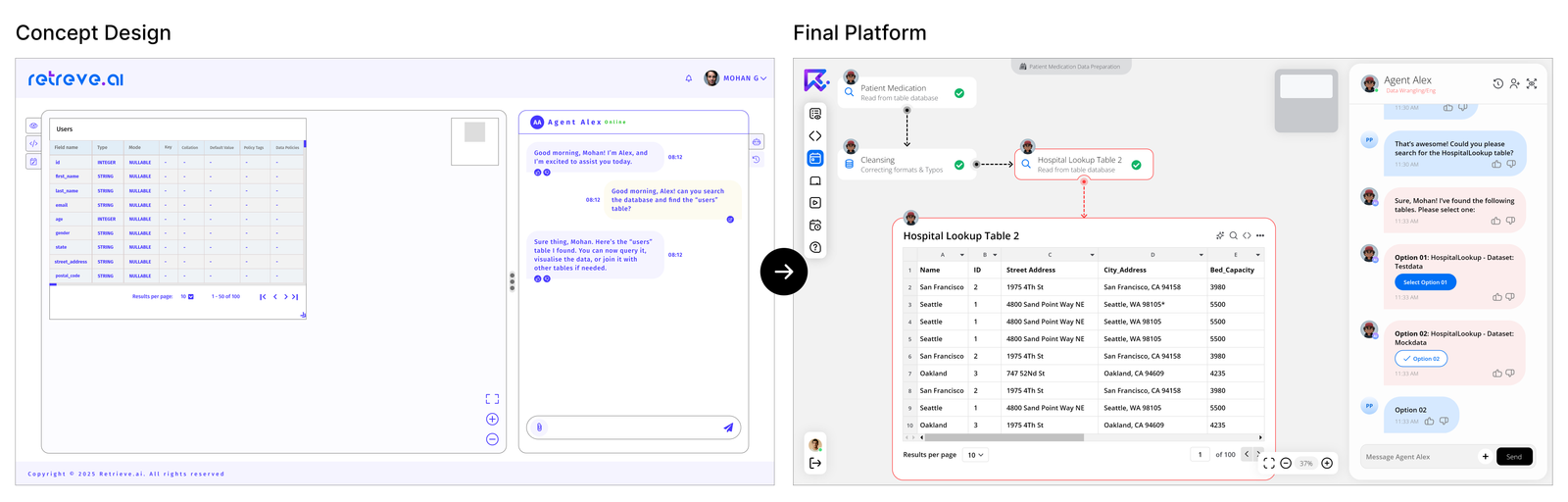
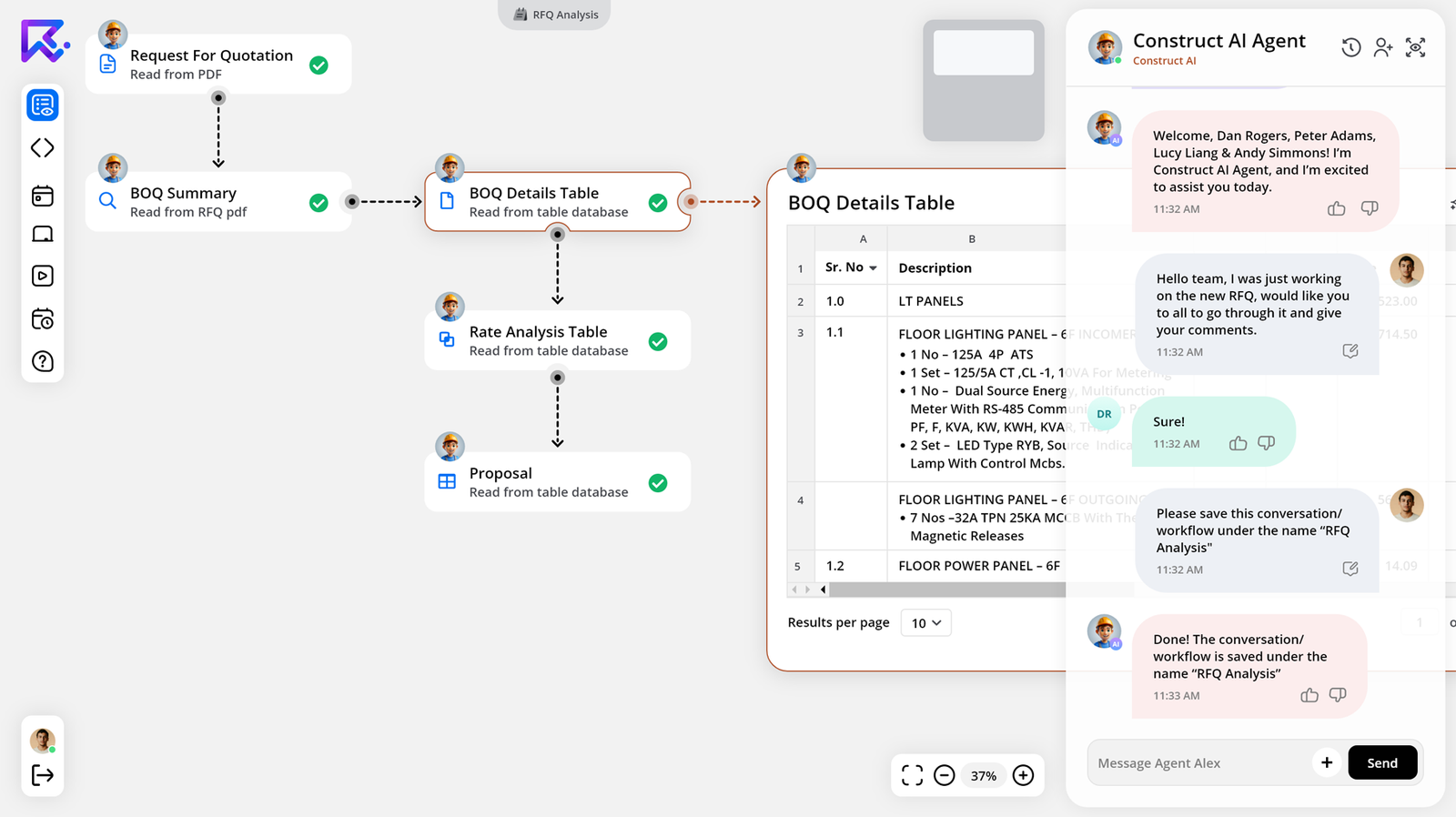
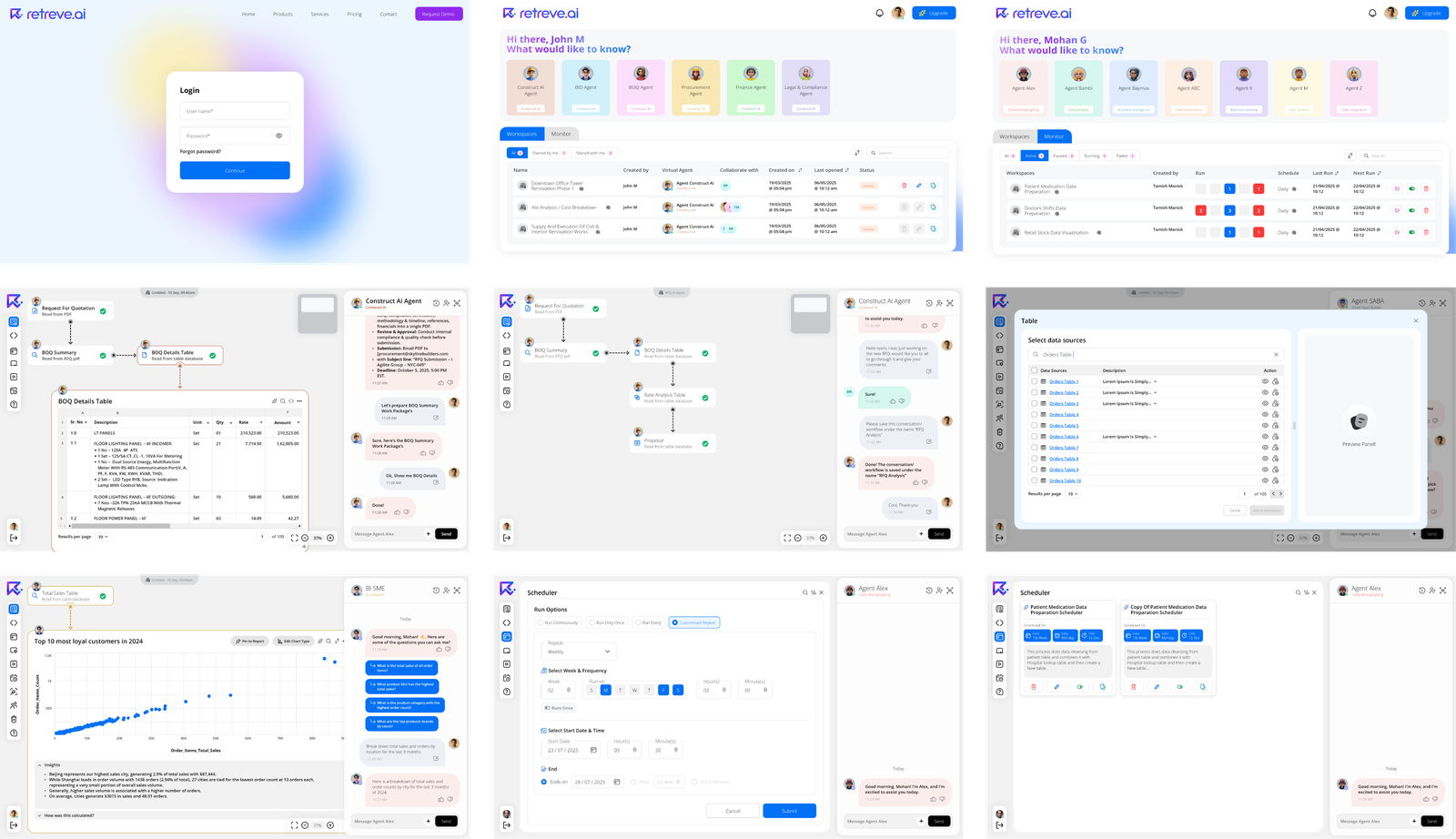
Retreve product overview
A full product overview showing the evolution from concept to final platform.

One Conversation Changed Everything

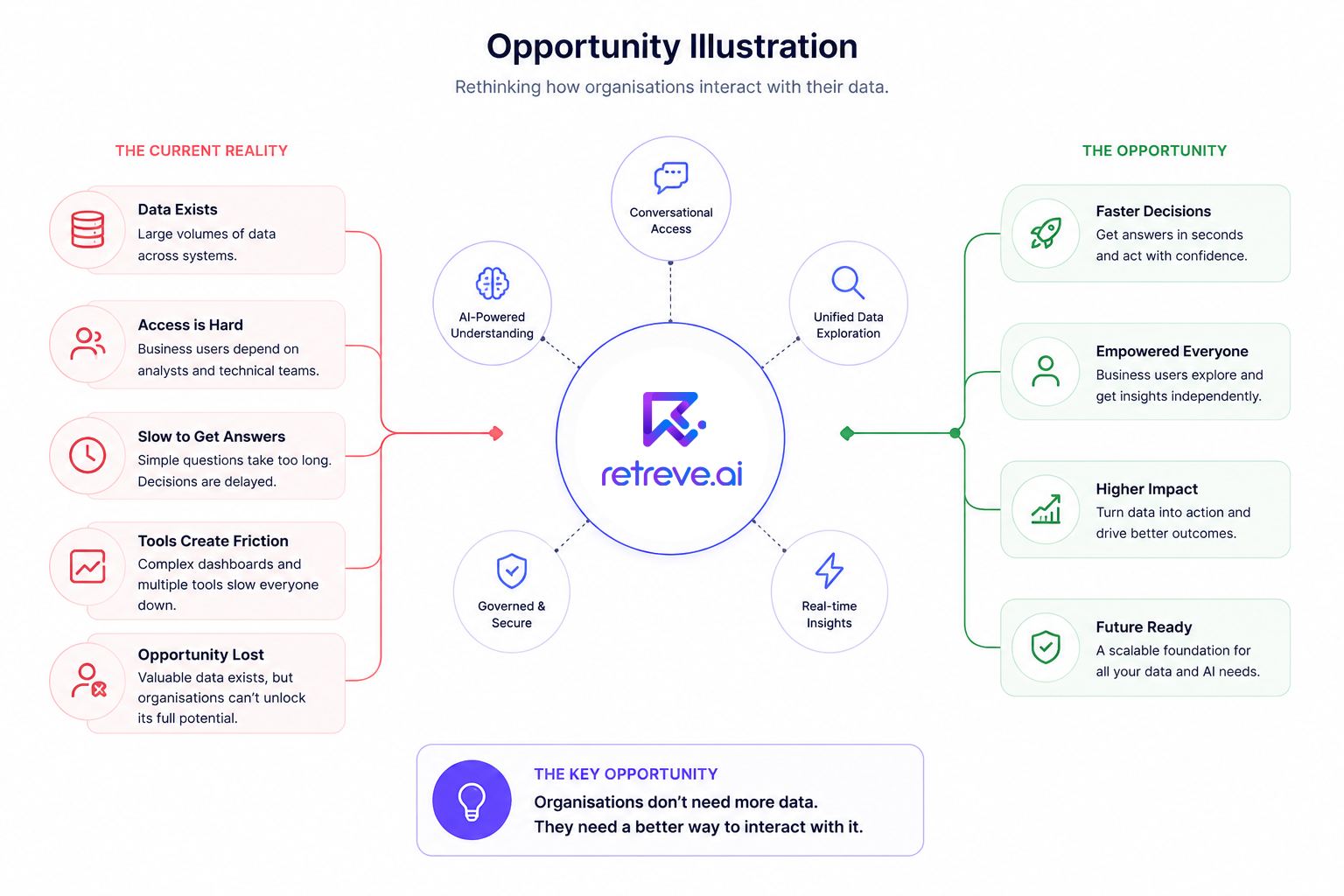
Retreve didn't begin with a product roadmap or a detailed specification. It began with a conversation around a recurring frustration that many organisations had quietly accepted as normal.

Despite years of investment in business intelligence platforms, dashboards and data infrastructure, people still struggled to get timely answers from their own information. Business users depended on analysts. Analysts depended on technical teams. Valuable data existed, but accessing it remained unnecessarily difficult.

The question wasn't whether organisations needed more data.

It was whether they needed a better way to interact with it.

That single observation shifted the entire direction of the engagement.

Rather than starting with technology, the focus moved towards understanding how people actually searched for information, how decisions were made inside organisations and where traditional business intelligence platforms continued to create friction. The objective wasn't to improve reporting. It was to rethink the relationship between people and enterprise knowledge.

The more those conversations evolved, the clearer it became that the opportunity extended well beyond analytics. Retreve wasn't simply about answering questions faster. It was about making enterprise intelligence accessible to the people making everyday business decisions.

Everything that followed grew from that initial conversation.

Opportunity illustration
Opportunity Illustration

Understanding the Problem

The temptation with every new product is to begin designing solutions.

We deliberately did the opposite.

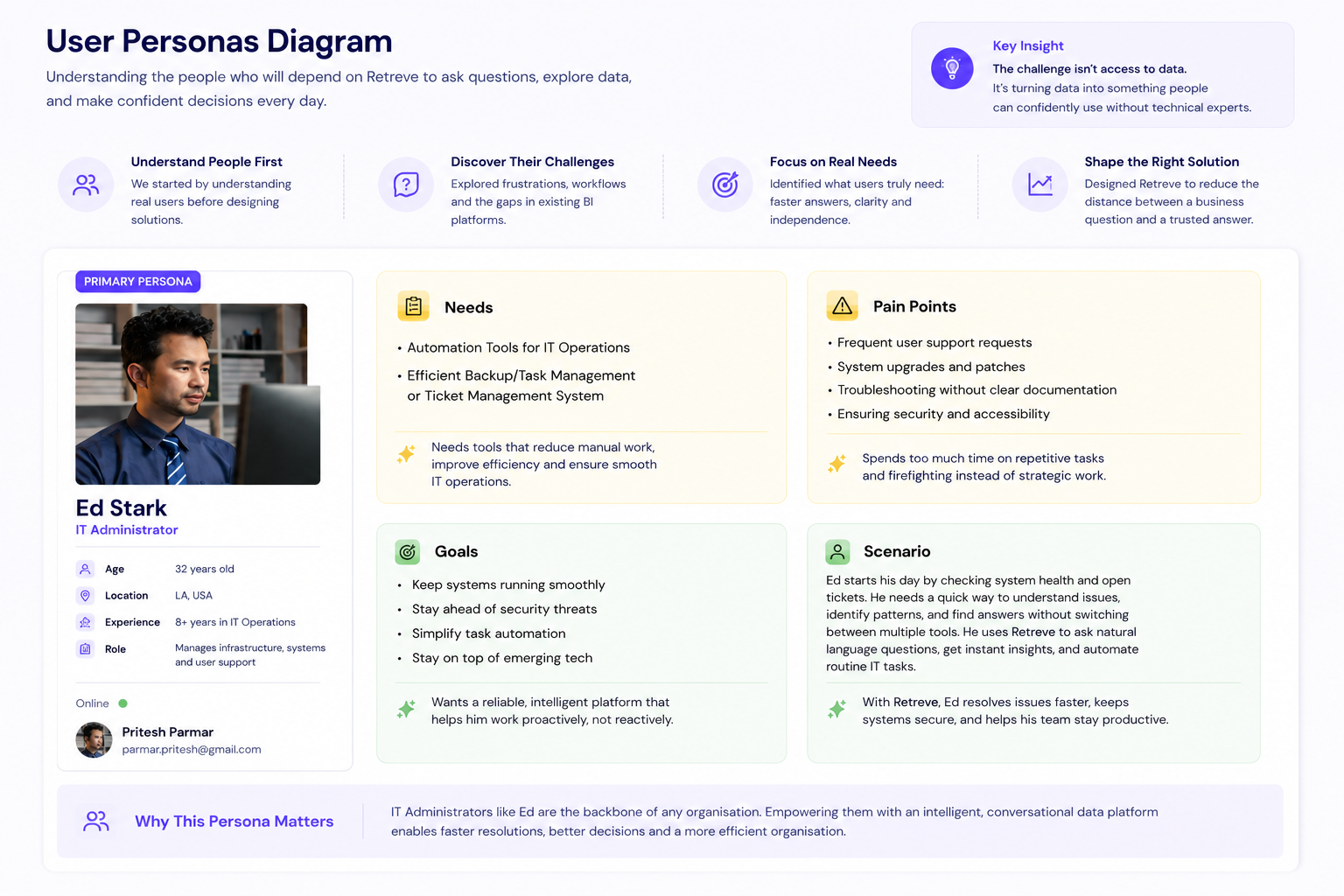
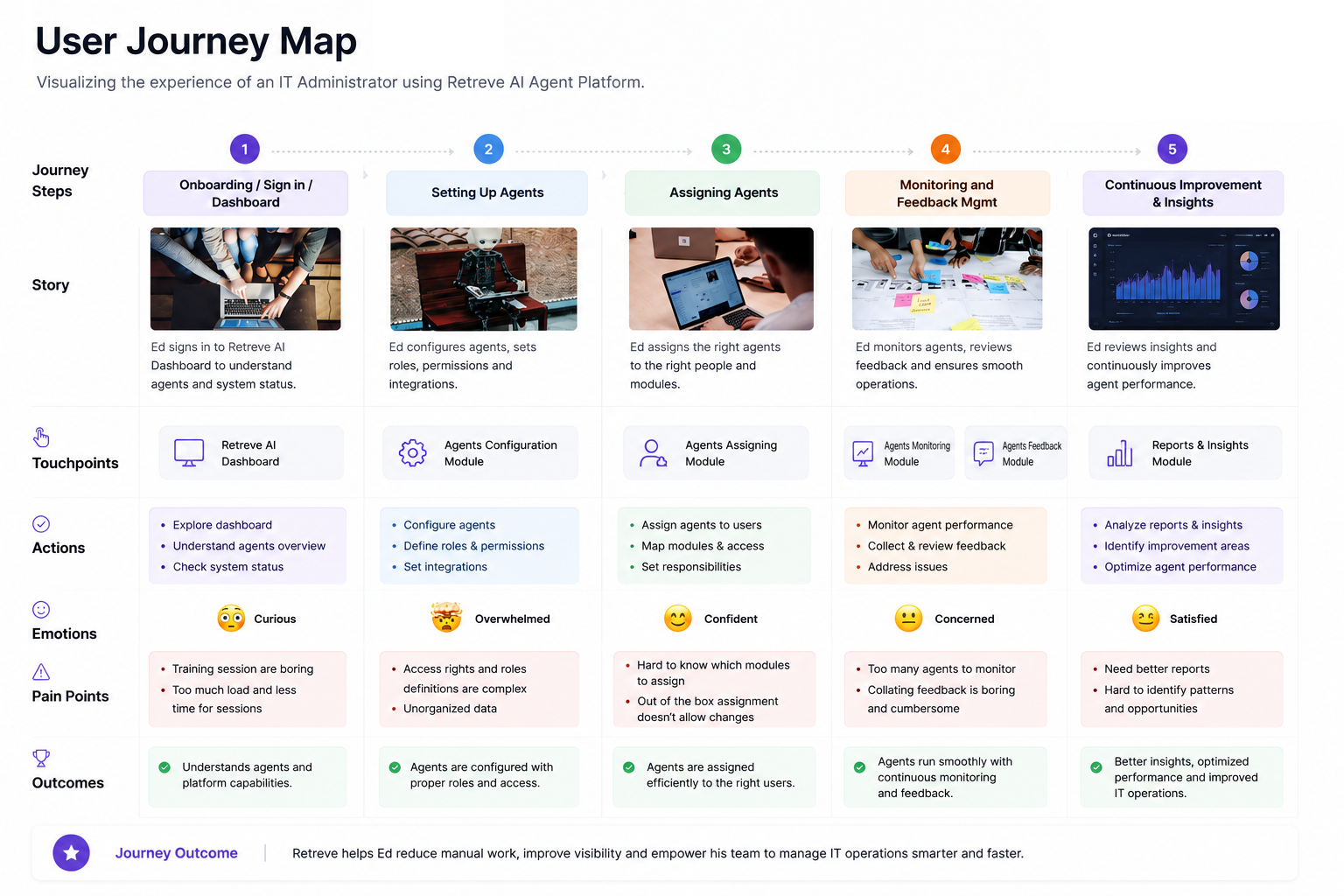
Before defining features, interfaces or workflows, we spent time understanding the people who would ultimately depend on the platform. What questions were they trying to answer? Why did existing business intelligence tools continue to frustrate experienced users? Where did confidence disappear between asking a question and receiving an answer?

One insight surfaced repeatedly.

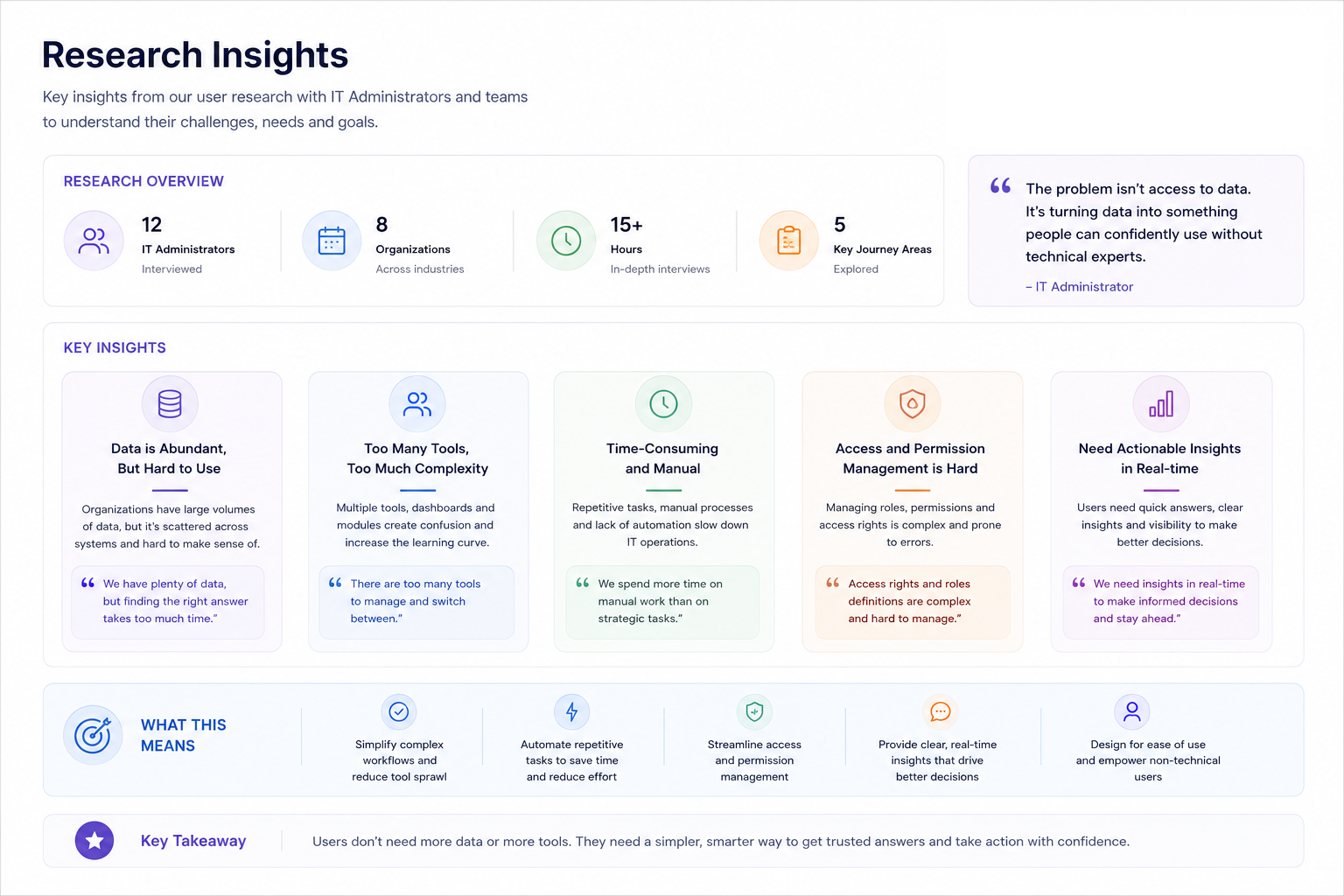
The problem wasn't access to data. Most organisations already had more data than they knew what to do with. The challenge was transforming that data into something people could confidently use without depending on technical specialists.

That changed the conversation.

Instead of designing another analytics platform, the product evolved around a different objective: reducing the distance between a business question and a trusted answer. Every decision that followed, from information architecture and interaction design to AI conversations and workflow prioritisation, was measured against that principle.

By understanding the problem before defining the product, engineering gained clearer direction, stakeholders aligned around a common vision and the product developed around genuine user needs rather than technical assumptions.

User personas
User Personas
User journey
User Journey
Research insights
Research Insights

Defining the Product

With a clearer understanding of the problem, the next challenge was deciding what Retreve should become.

At this stage, there was no shortage of possibilities. Enterprise AI was evolving rapidly, expectations were changing almost weekly and it was easy to be distracted by new technologies and feature requests. The discipline wasn't deciding what to build, it was deciding what not to build.

Rather than creating another analytics platform with conversational capabilities, the product was positioned around a much simpler ambition: helping people access business intelligence through natural conversations instead of traditional reporting interfaces.

That decision influenced every part of the product.

Information architecture was organised around questions rather than reports. User journeys were designed around decision-making rather than navigation. Features were prioritised based on how effectively they reduced friction between curiosity and insight, not on how many capabilities could be demonstrated.

As ideas evolved, the product became progressively easier to explain. That simplicity wasn't accidental. It was the result of continuously refining workflows, removing unnecessary complexity and challenging assumptions before they reached engineering.

The objective was never to create the most feature-rich platform.

It was to create the product that organisations would understand, adopt and trust.

By the end of this phase, Retreve was no longer just an interesting idea.

It had become a clearly defined product with a shared vision, a coherent structure and a roadmap that engineering could build with confidence.

Product blueprint
Product Blueprint

**Information Architecture**

*Organising enterprise intelligence around how people think, not how systems store information.*

**Wireframes**

*Early explorations used to validate workflows, challenge assumptions and simplify interactions before development.*

**Feature Prioritisation**

*Identifying the capabilities that delivered the greatest customer value while maintaining product focus.*

Designing Conversations

Traditional business intelligence platforms were designed around navigation.

Users were expected to know where information lived, which report to open and how to interpret the results. Finding an answer often meant navigating through layers of dashboards, filters and visualisations before arriving at a useful insight. For experienced analysts this became routine. For everyone else, it became a barrier.

Retreve challenged that assumption.

Instead of asking users to learn the system, the system was designed to understand the user.

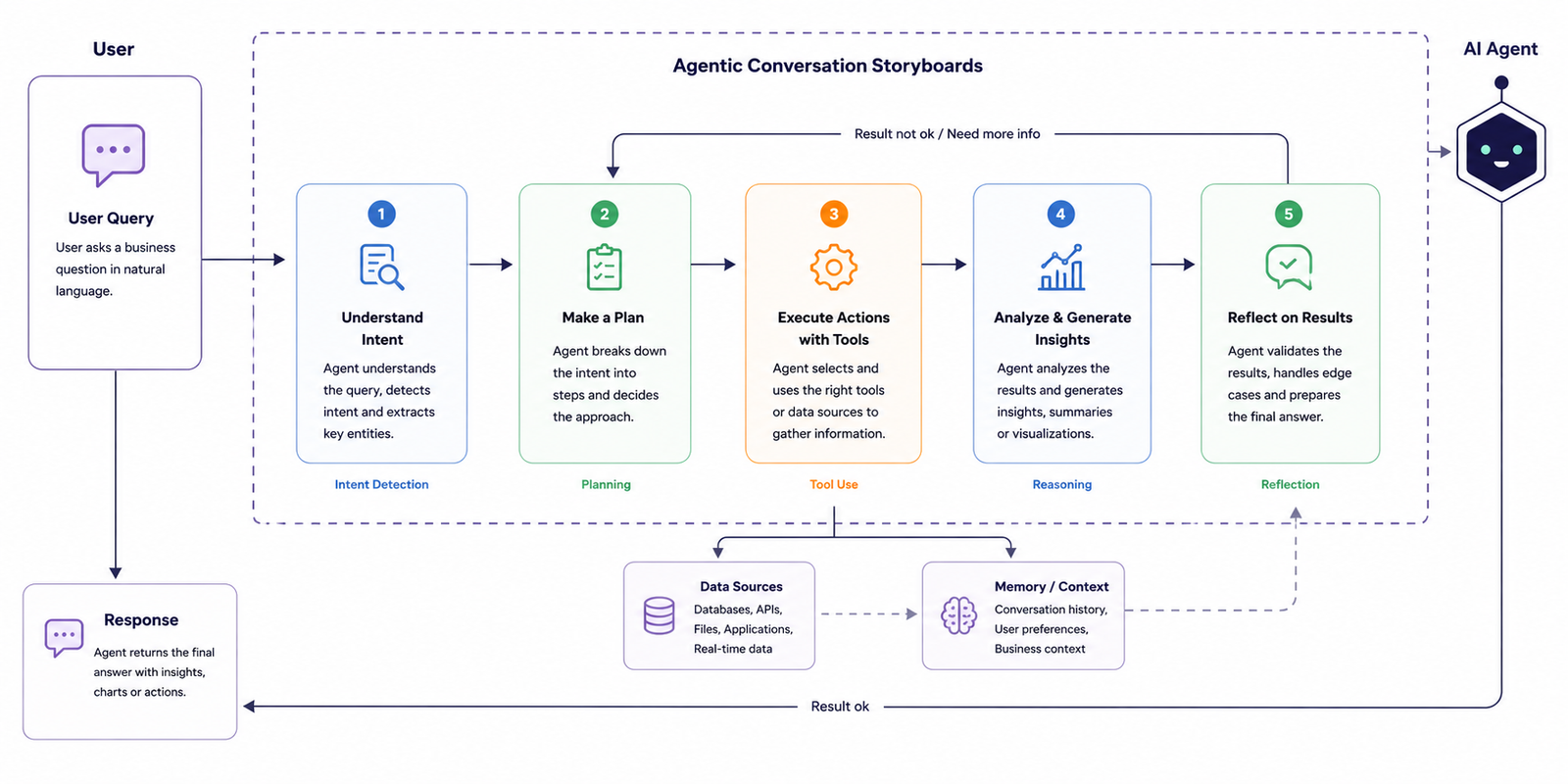
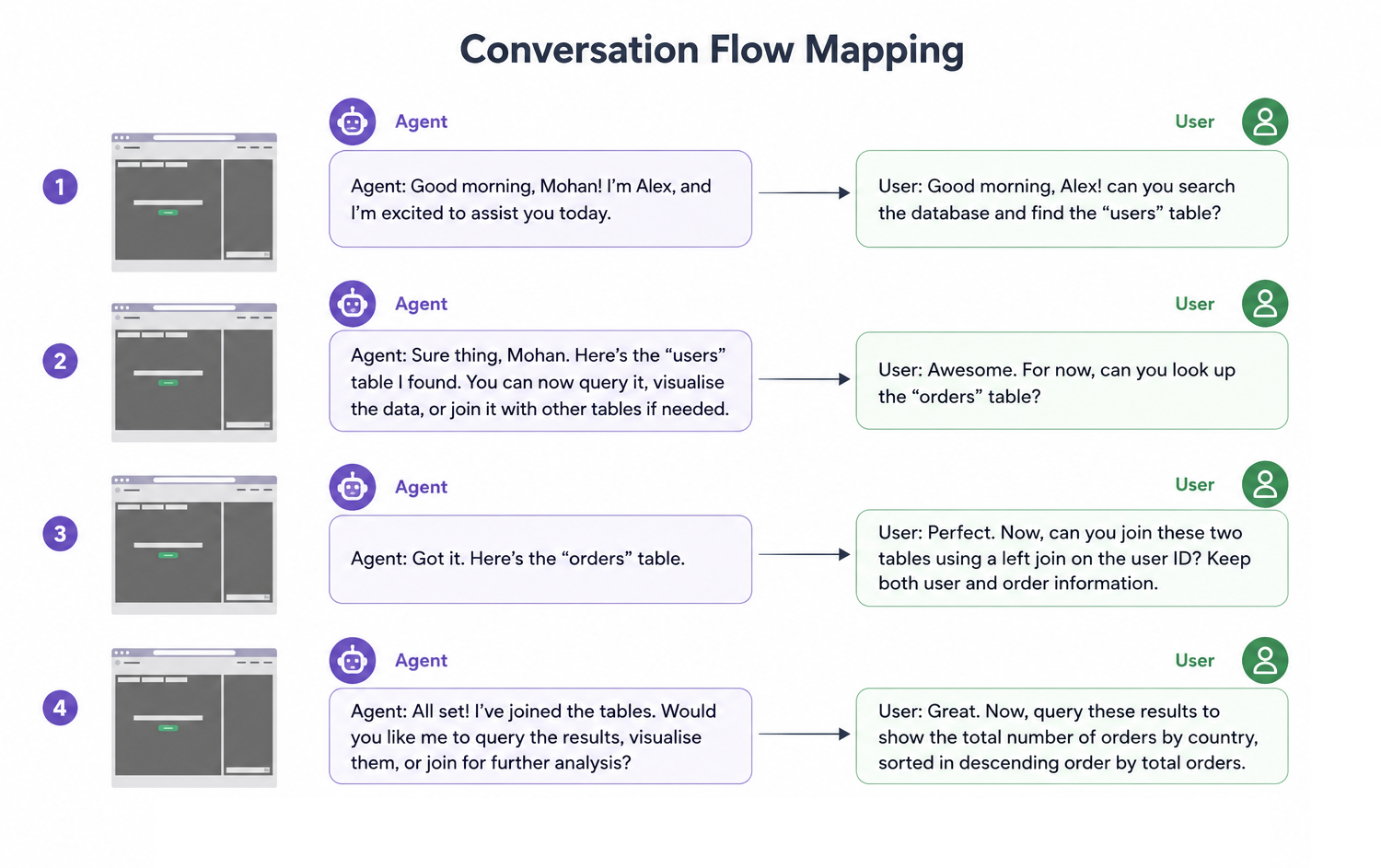
Conversation became the primary interface because it reflected how people naturally think. Business leaders don't wake up wanting to explore dashboards, they ask questions. *How did sales perform this quarter? Why has customer churn increased? Which region is underperforming?* Those questions became the foundation of the product experience.

Designing those conversations required far more than placing a chat interface on top of enterprise data. Every interaction needed to establish context, understand intent and guide users towards meaningful answers without overwhelming them with unnecessary information. The experience had to feel intelligent without becoming unpredictable, and powerful without becoming complicated.

This led to a significant shift in how the product was designed. Navigation became secondary to intent. Workflows were organised around conversations instead of screens, allowing users to move naturally from one business question to the next. Rather than forcing people to adapt to the product, the product adapted to the way people already worked.

By the time the interaction model was complete, Retreve no longer felt like another analytics platform.

It felt like a conversation with the organisation's knowledge.

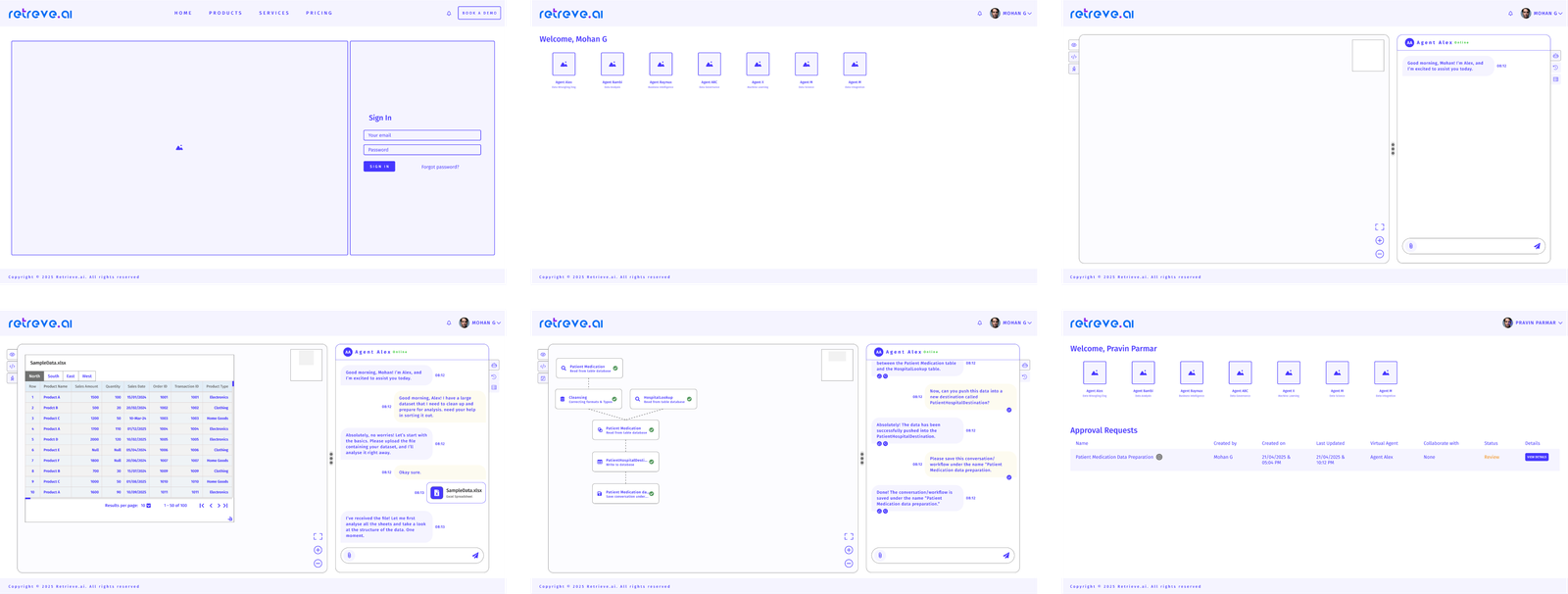
Agentic conversation storyboards
Agentic Conversation Storyboards
Conversation flow mapping
Conversation Flow Mapping
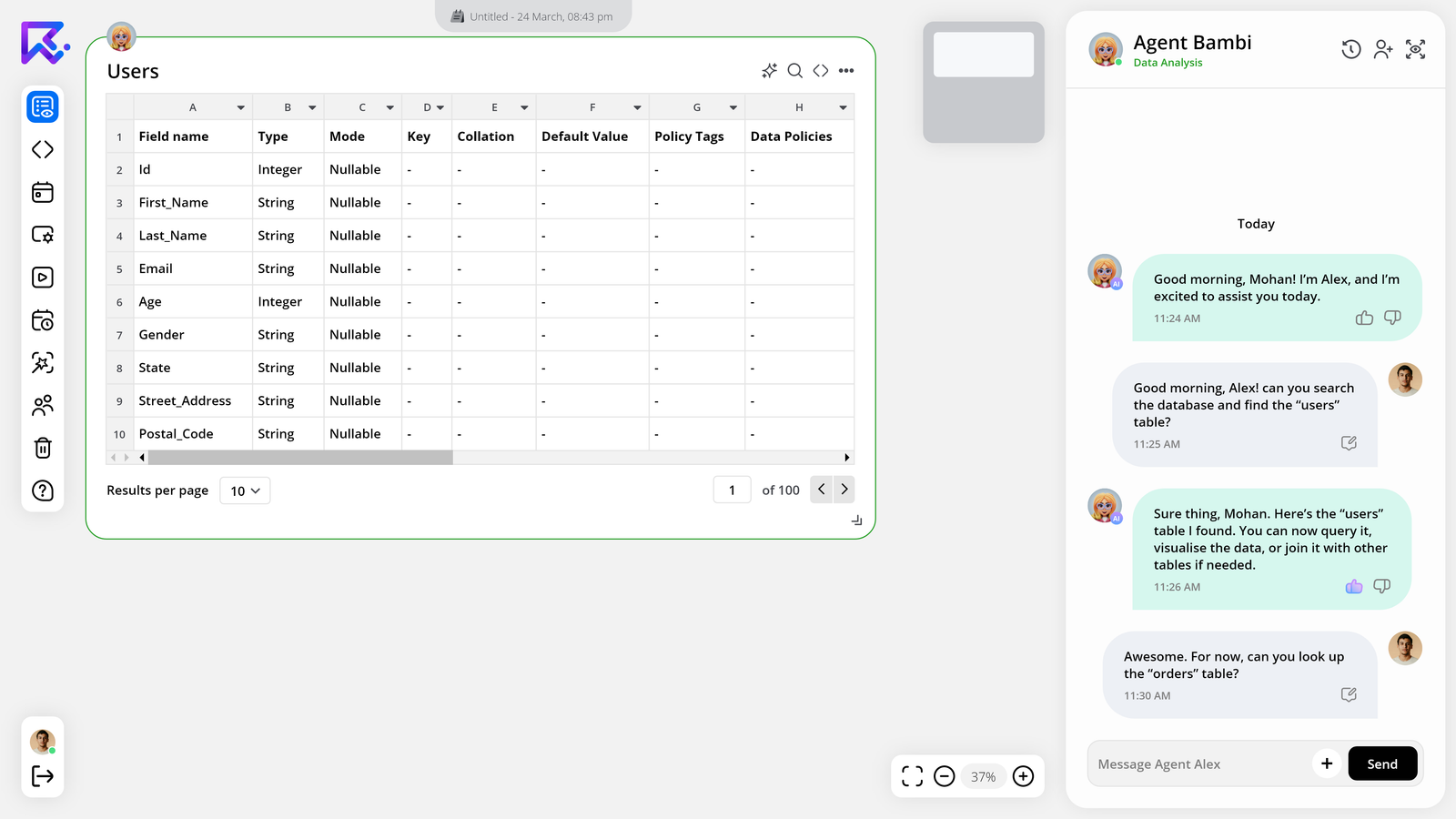
UI evolution
UI Evolution

Building the Brand

As the product became clearer, another challenge emerged.

People could understand what Retreve did, but they still struggled to understand what it was.

Was it another business intelligence platform? An AI assistant? An enterprise search engine? A knowledge platform? The technology could be described in many different ways, but none of those descriptions communicated the product's real purpose.

The brand became the bridge between the vision and the market.

Rather than beginning with visual identity, the process started by defining the product's position within an increasingly crowded AI landscape. Every discussion focused on the same question: *what should people remember after their first conversation with Retreve?* The answer wasn't a list of features or technologies. It was the promise of making enterprise intelligence easier to access through natural conversations.

From that positioning, the rest of the identity evolved naturally. Naming, messaging, visual language and interface design were developed together so that every customer touchpoint communicated the same idea. The brand didn't exist to decorate the product. It existed to explain it.

This became particularly important as the Product Experience Models were introduced. Customers, investors and stakeholders weren't simply evaluating screens, they were evaluating whether the product felt credible, differentiated and commercially viable. A clear identity made those conversations significantly easier because people understood the product before they understood the technology behind it.

By the end of the engagement, Retreve had evolved from an interesting concept into a product with a distinct identity, a clear point of view and a consistent narrative that extended across every interaction.

The brand wasn't the finishing touch.

It became part of the product itself.

Brand exploration
Brand Exploration
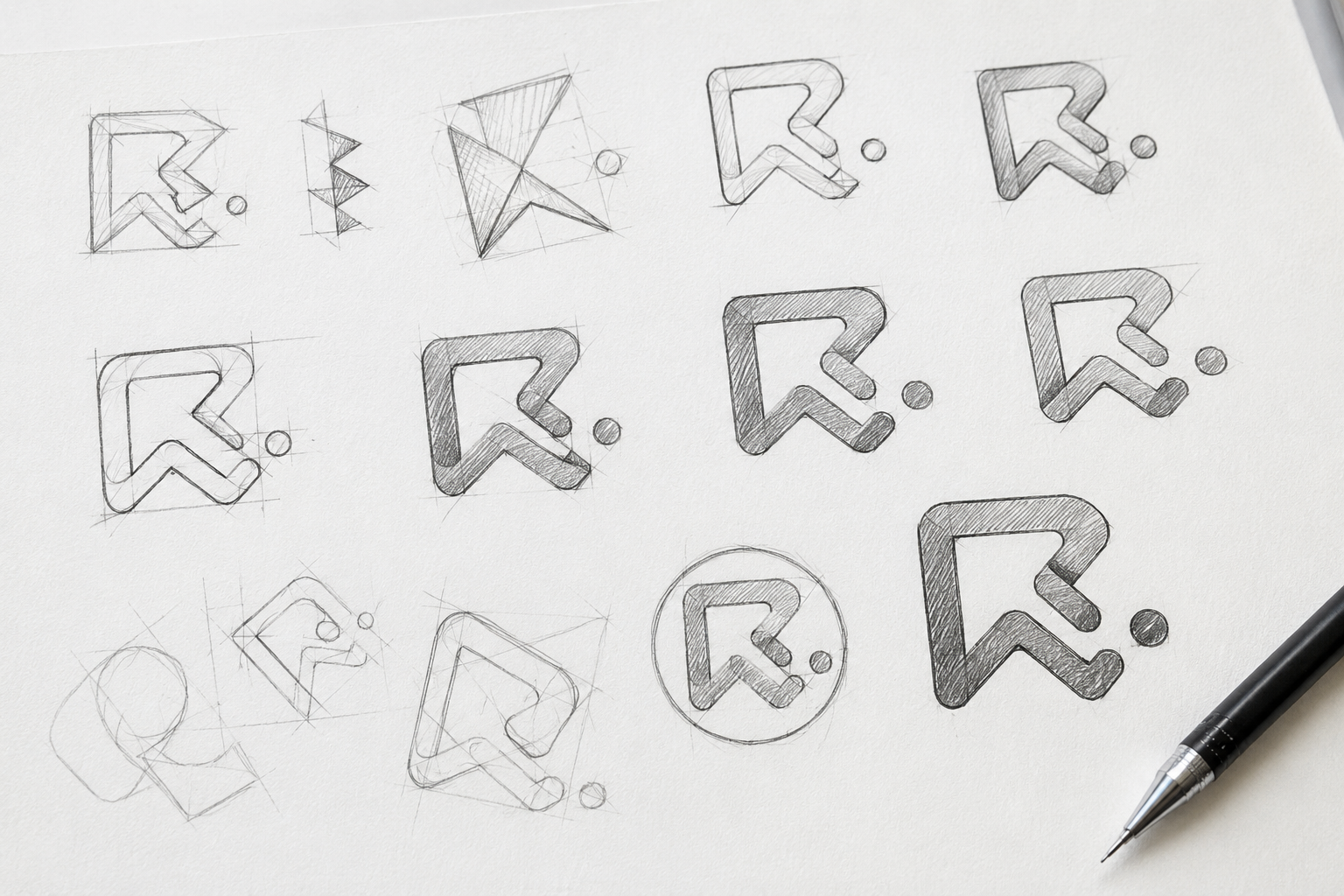
Logo evolution
Logo Evolution
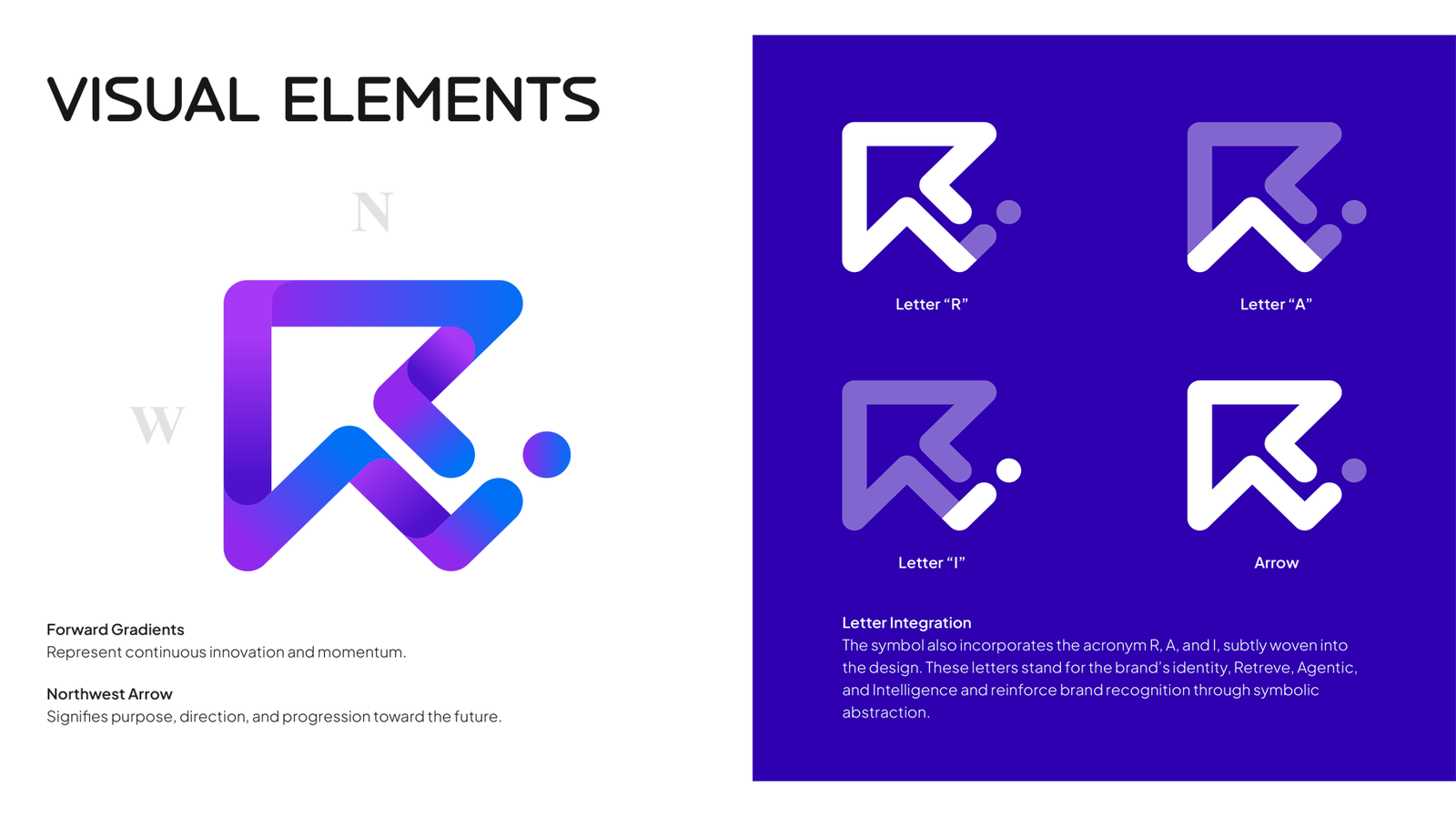
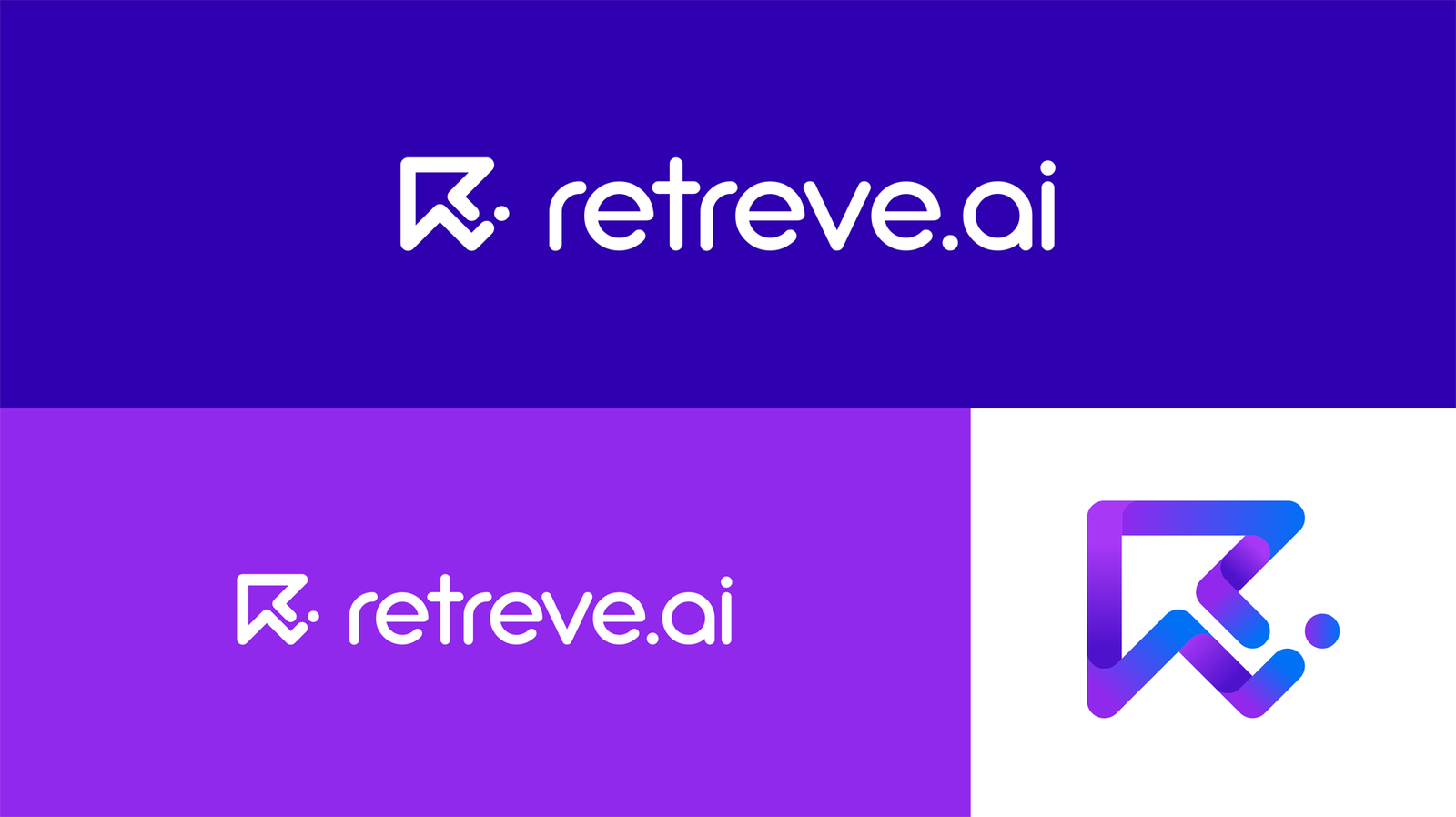
Final brand logo
Final Brand Logo
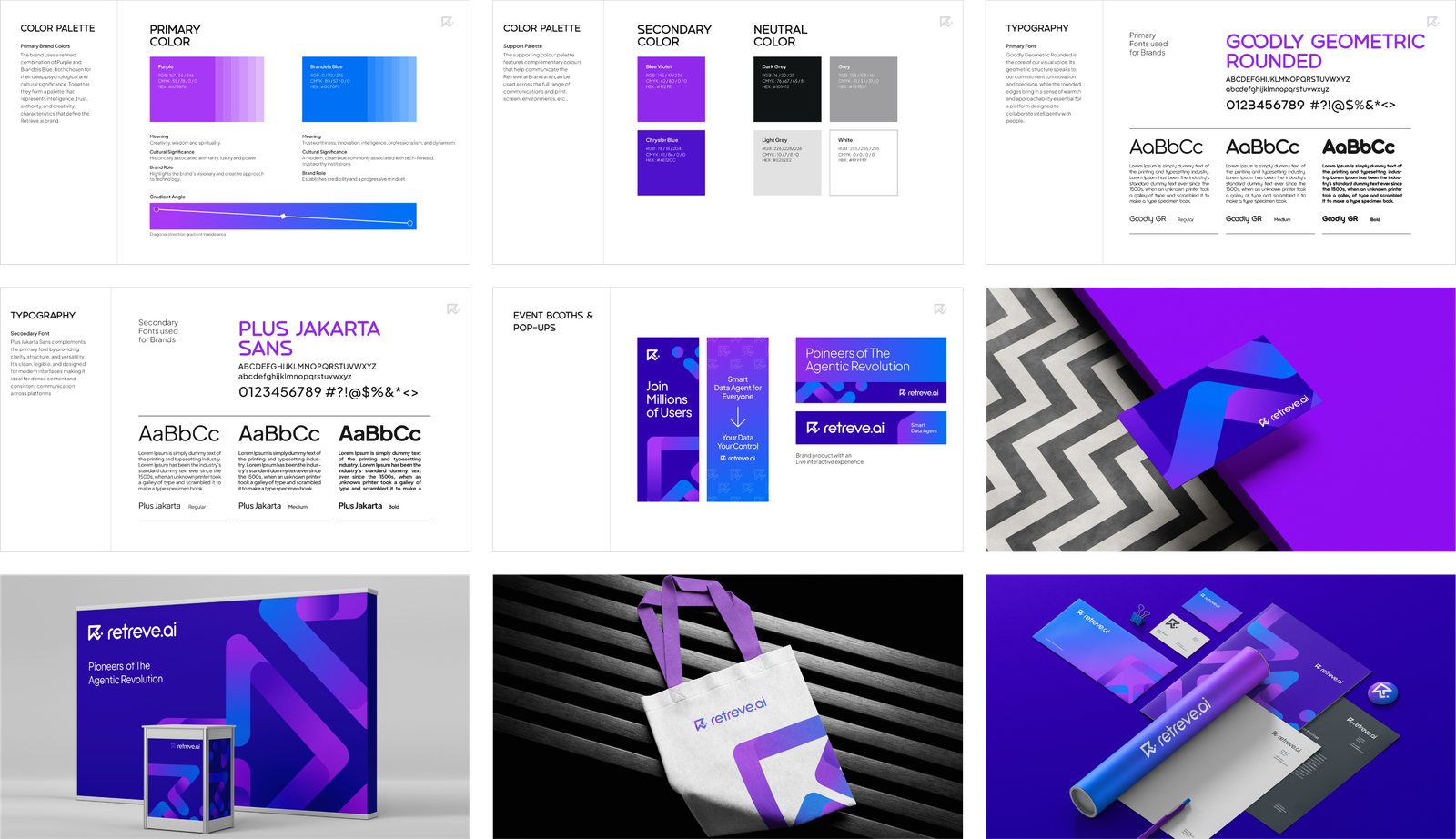
Design system
Design System

Product Experience Model™

One of the biggest challenges in early-stage product development is that engineering and commercial momentum rarely move at the same pace.

Software takes time to build.

Markets don't wait.

Investors need something to evaluate, early customers need something to experience and product teams need meaningful feedback long before the platform reaches production. Waiting for engineering to answer every question often delays learning until it becomes expensive to change direction.

Retreve followed a different path.

While development progressed in parallel, the product itself continued to evolve through successive Product Experience Models. These weren't prototypes created to imitate software. They were strategic representations of the product, designed to communicate how it would behave, how people would interact with it and why it mattered.

Each version became a catalyst for conversation.

Customer demonstrations revealed where expectations differed from assumptions. Investor presentations tested whether the product proposition was commercially compelling. Internal workshops aligned engineering, product and business teams around a shared understanding of what was being built. Every discussion generated insights that shaped the next iteration before those decisions became embedded in code.

The Product Experience Models also transformed the way the product was presented.

Rather than explaining ideas through documents or presentations, stakeholders experienced the product directly. They could navigate workflows, explore conversations and understand the value proposition in a way that static specifications could never communicate. The product became tangible long before it became technically complete.

This approach fundamentally changed the relationship between product strategy and engineering.

Development no longer carried the responsibility of validating every assumption. By the time functionality was implemented, many of the most important product decisions had already been challenged, refined and aligned through real-world conversations.

Retreve demonstrated that commercial readiness doesn't begin after development.

It can evolve alongside it.

The Product Experience Model became the bridge between vision and execution, allowing the product to mature through understanding before it matured through software.

For Extant, this has since become a core principle of how products are shaped.

The first version people believe in is often more important than the first version they can install.

Product Experience Model, version 1
Product Experience Model, Version 1
Product Experience Model, version 2
Product Experience Model, Version 2
Retreve final product experience
Final Product Experience

Outcome

By the end of the engagement, Retreve had evolved from an early product idea into a clearly defined enterprise platform with a shared vision, a credible market position and a product experience that people could understand long before engineering was complete.

Instead of relying solely on technical progress to communicate value, the product became a powerful communication tool in its own right. Product Experience Models, strategic positioning and refined user journeys enabled meaningful conversations with customers, investors and stakeholders while development continued in parallel. Feedback that would traditionally arrive after launch was captured much earlier, allowing important product decisions to be validated before they became expensive to change.

Equally important was the alignment it created internally. Engineering teams worked towards a clearer product vision, business stakeholders gained confidence in the direction of the platform and every discussion was anchored around a shared understanding of what Retreve was becoming.

The outcome wasn't simply a better interface or a more polished demonstration.

It was a product with greater clarity, stronger commercial readiness and a development process informed by continuous learning rather than assumption.

Retreve reinforced an important belief that continues to shape the way Extant approaches product development today.

When people understand the product, better decisions follow.

When better decisions happen early, better products emerge.

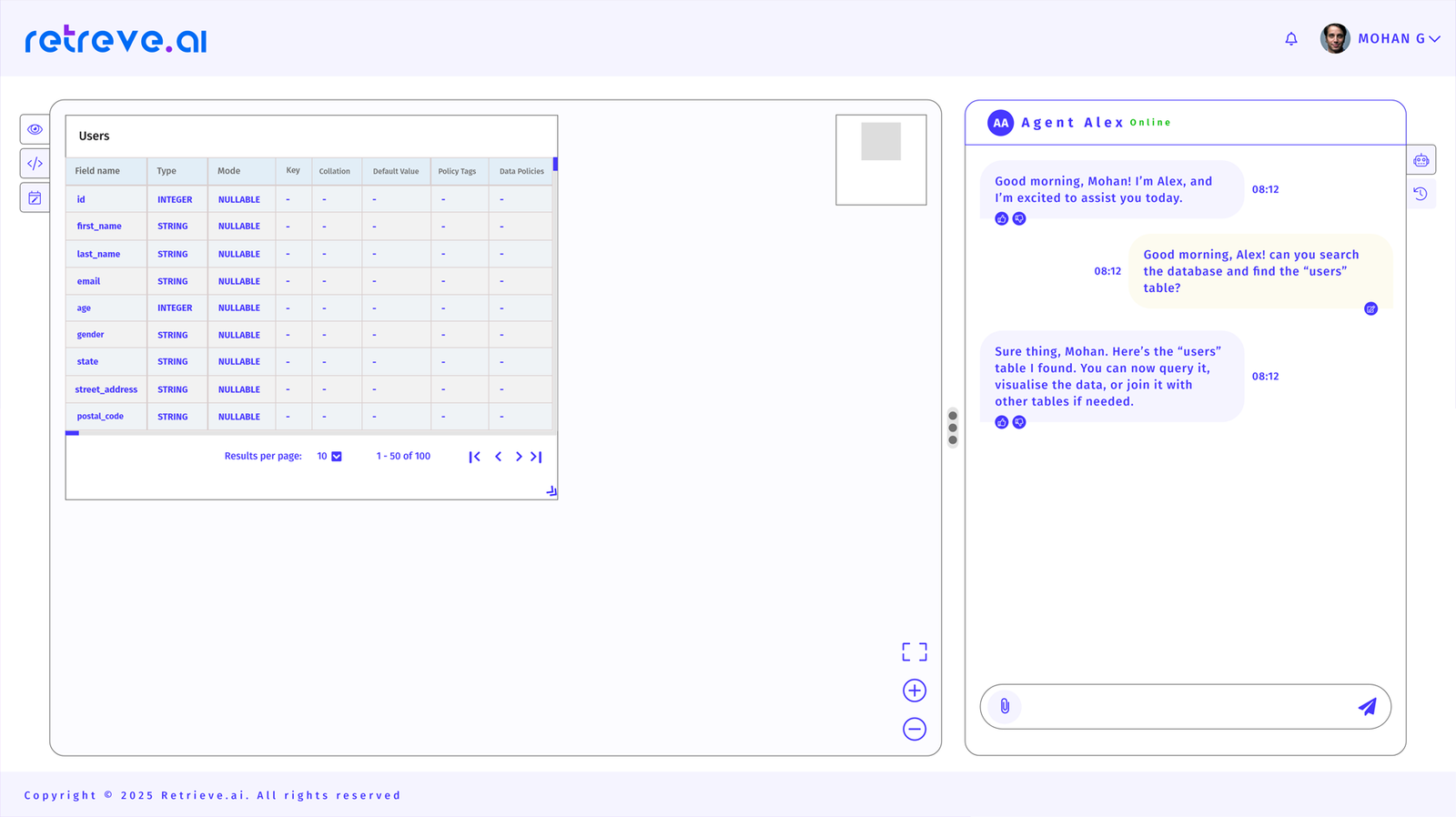
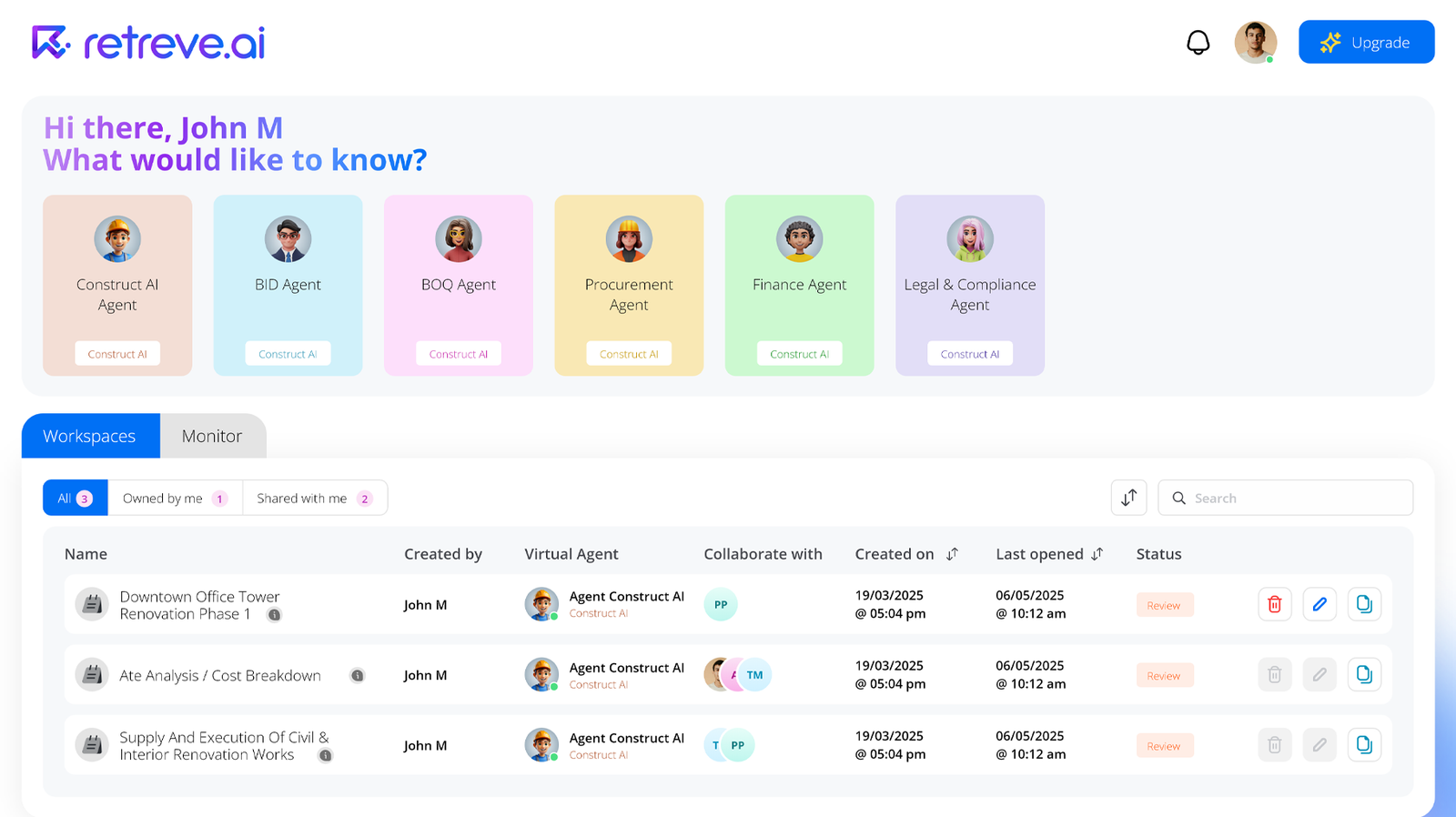
Retreve final platform
Final Platform

What We Learned

Retreve reinforced a lesson that extends far beyond enterprise AI.

Many organisations believe products begin when development begins. In reality, development simply gives shape to decisions that have already been made. The quality of a product is often determined long before the first line of code is written.

The most valuable work happened before software existed.

It happened when assumptions were challenged instead of accepted. When users were understood before features were prioritised. When the product was given a clear identity before it was introduced to the market. When customers, investors and engineers could all see the same vision, even though the platform itself was still evolving.

Perhaps the biggest lesson was that commercial understanding and technical development don't need to happen one after the other. They can, and should, evolve together. Every conversation with a customer, every investor presentation and every Product Experience Model created opportunities to refine the product before engineering committed to implementation.

For us, this changed how we think about building products.

We no longer see strategy, branding, experience design and engineering as separate phases. They are different expressions of the same product journey, each reducing uncertainty and increasing confidence before the next decision is made.

Retreve didn't prove that AI can answer business questions.

It proved something far more important.

When people understand a product, they make better decisions about it.

And better decisions build better products.

The first version of a product isn't software. It's understanding.

Facing a similar challenge?